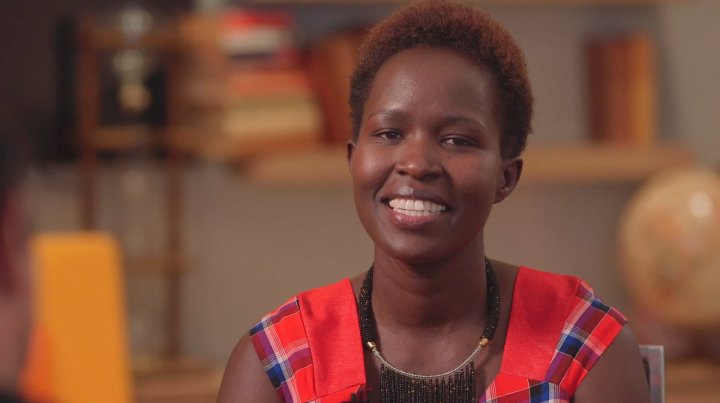
The bargain done with her father by the first Maasai PhD graduate, Kakenya Ntaiya, was unfair and brutal, but contains a hidden lesson that does not seem to have had much air-time. Preteen Kakenya “agreed” to traditional Maasai genital mutilation, in return for being allowed to continue her education. (1)
The lesson is that in patriarchal societies or communities, the minds that must be changed are the fathers’. The focus is generally on the remarkable young women, who become extraordinary role models. However, until patriarchal control of societies disappears, well beyond my lifetime, educating fathers, and supporting progressive fathers, in patriarchal societies is crucial. A father who wants, or at least allows, his daughters to be educated must overcome inherited biases, centuries of local cultural practice, family and community ostracism, threats of violence and actual violence. But, in the end, a father in a patriarchal society, who can be convinced that his daughter has the right to be educated can change the world.
Ziauddin Yousafzai was an an outspoken advocate of education for girls, and education generally, in a society where girls were generally not educated. Despite threats of violence, he ran a small school adjacent to his home. He wanted his daughter to be educated and she also became a passionate advocate of education for girls. Her story is well known; her name is Malala. She is changing the world.
Yassmin Abdel-Magied’s parents, father and mother, apparently came to Australia from Africa to ensure that that their child had the chance of a better education. Yassmin took to schooling, where she excelled, became a Bachelor of Engineering, with honours, and has become a passionate advocate of religious tolerance and education for young women. She is a bright spark in social debate in Australia.
Kakenya often quotes a Maasai saying: ‘You cannot sweep outside your house until you sweep inside’. Four years after NSW was colonised, in England, Mary Wollstonecraft argued that women should receive an education, in her treatise A Vindication of the Rights of Woman. Australia has not made the progress that the second country to allow suffrage to women should, by now, have made. (2) It was less than 80 years ago that my mother, in Australia, an apparently excellent student who wanted to be a veterinary surgeon, was removed from school by her father to train as a secretary and prepare for marriage.
Changing these attitudes is important, and just. It is no coincidence that the first paragraphs of the first of the Four Basic Principles of Women’s Equality, in the recently-revised Women’s Manifesto, require access to all levels of education. However, it is a disgrace that this still needs to be said in countries like Australia.
Please watch the video of Kakenya Ntaiya’s story here or here and take heart from her do whatever you can, wherever you can, NOW.
You can support Kakenya’s project here.
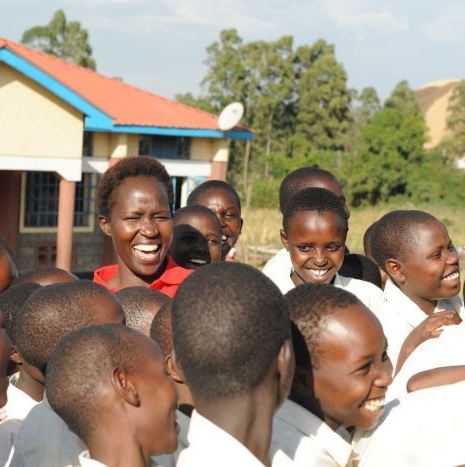
(1) Kakenya says that more than 75% of Kenya’s Maasai women have been cut.
(2) New Zealand was first, Australia second in 2002, with the exception of Indigenous women who were not allowed to vote until 1962.

 il Vecchio